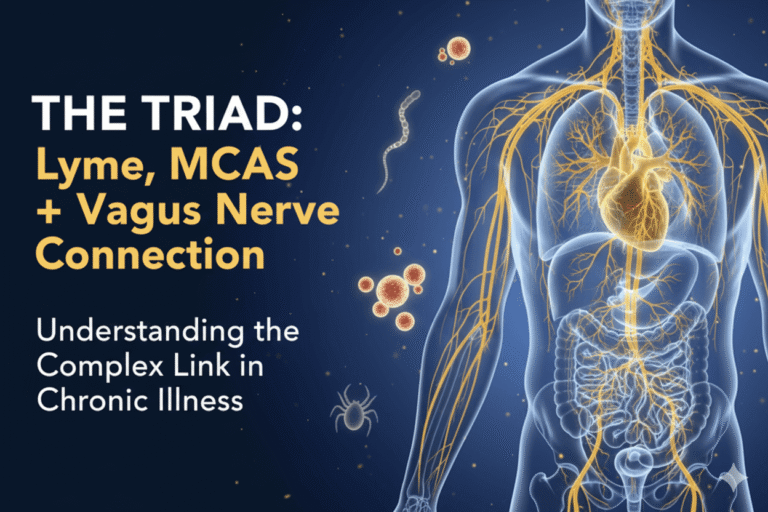
When you’re dealing with Lyme disease, it can feel like every part of your...
Read More
Start living your Healthiest Life
Support & Guidance for Lyme, Co-Infections & MCAS Recovery

“I’ve lived through the struggle of complex chronic illness – and emerged stronger, healthier, and full of hope. You can too”
Empower Your Recovery
Go beyond basic facts: uncover symptoms, hidden triggers, and overlooked co-infections.
Lyme Disease 101
Everything you need to know about Lyme Disease Symptoms, Testing, and Treatment.
Resources
Find trusted tools, guides, and expert insights to help you navigate your healing journey.
About Us

Expert by Experience
Lyme And More is a comprehensive resource dedicated to helping those suffering from Lyme disease, its related co-infections, MCAS and POTS. Our mission is to offer reliable information, and practical healing strategies to guide you on your recovery journey.
Through in-depth articles, treatment insights, sharing our years of experience of living with Lyme disease, we aim to empower you with knowledge, inspire hope, and connect you with the tools you need to move forward.
"I believe that illness has led me to a life of gratitude, so I consider Lyme disease at this point in my life to be a blessing in disguise."
Rebecca Wells
Novelist & Actor
Featured Articles

My Chronic Lyme Disease & MCAS Journey
2019: The Beginning of Everything When I think back to the first time Lyme...
Read More
LifeWave Patches as support for Lyme & MCAS Recovery
When you’re living with Lyme disease, MCAS (mast cell activation syndrome), and POTS (postural...
Read MoreFrequently Asked Questions

Did you know over 500,000 people are diagnosed with Lyme disease or a related co-infection every year?
We work hard to provide you with the latest Lyme news, insights and guidelines so you can get better, faster.
What is Lyme Disease?
Lyme disease is an infectious illness caused by the bacterium Borrelia burgdorferi (and related species), transmitted to humans through the bite of infected blacklegged ticks (often called deer ticks).
If not detected and treated early, Lyme disease can spread beyond the initial bite site and affect multiple systems in the body.
What are the symptoms of Lyme Disease?
Lyme disease may spread to any part of the body and affect any body system. Typically, it affects more than one body system. The symptoms can vary widely and often mimic other coditions.
A hallmark early sign is the bull’s-eye rash (erytheme migrans), though not everyone develops it. If untreated, the infection may progress to more serious and long lasting problems.
Because symptoms can be so diverse and appear weeks or months after the bite, Lyme disease is sometimes called “the great imitator”.
Do I have Lyme Disease?
If you are experiencing (unexplained) symptoms and suspect that you mighy have Lyme disease, the most appropriate step is to consult a qualified healthcare professional.
How is Lyme Disease diagnosed?
Diagnosing Lyme disease can be challenging, since symptoms often differ between individuals and may resemble those of other illnesses. While blood tests are the most common tool to confirm the diagnosis, additional diagnostic methods may also be considered.
How can I treat Lyme Disease?
Early Lyme disease is typically treated with a course of oral antibiotics, most commonly doxycycline. Treatment is usually most effective when started promptly after infection.
However, becuase the antibiotic approach does not work for everyone, many patients try different treatments or combinations of treatments before finding what works best for them.
We have compiled a list of the most successful treatment methods.
What are common Co-Infections?
Ticks can carry more than just Borrelia. Common co-infections include Babesia, bartonella, Anaplasman, and Ehrlichia.
The co-infections may worsen illness, complicate diagnosis, or make treatment more difficult, since they often require different approaches or strategies.
Recognizing co-infections is important because their symptoms can overlap with Lyme disease, and untreated co-infections can prolong recovery. If Lyme treatment alone does not bring improvement, co-infections should be considered.
Is Lyme Curable?
Yes and no. What an infuriating answer right? The truth is we do not know.
Currently the CDC says Lyme Disease can be eradicated with antibiotics but as thousands living with chronic Lyme Disease in the US will tell you, this isn’t true.
So who is right? Research & time will tell. Until then, we want people to get better!
Join our community and learn from some of the individuals their success stories.
Can Lyme Disease come back after treatment?
In the Lyme community, the preferred term is usually “remission” rather than “healed” or “cured”. The idea is that symptoms can be controlled or disappear for long periods, but the infection may not be completely eradicated or the risk of relapse remains.
Some patients experience long-term symptoms even after a standard course of antibiotics. This is known as Post-Treatment Lyme Disease Syndrome (PTLDS). It’s also sometimes referred to as chronic Lyme disease.
According to many Lyme-literate doctors, these lingering symptoms can have different reasons. First, the initial antibiotic course may not have been enough to eradicate the infection. Second, while the Lyme infection may have been cleared, a tick can transmit other pathogens in addition to Borrelia, leading to so-called co-infections and resulting in multiple infections.
Where can I find support?
Living with Lyme disease can be challenging both physically and emotionally. Lyme And More provides insights on Lyme disease and related illnesses, treatment updates and coping strategies. Many people also find value in connecting with others who share their experiences. Support networks are important not only for knowledge but also for emotional encouragment and practical advice during recovery.
What is Mast Cell Activation Syndrome (MCAS)?
Mast Cell Activation Syndrome (MCAS) is a complex condition where the body’s mast cells -key players in your immune system- become overactive, releasing excessive amounts of chemicals and causing a wide range of symptoms. From allergic reactions, hives, and digestive issues to dizziness, brain fog, and fatigue, MCAS can impact multiple systems in the body, making it challenging to diagnose and manage.
What are the symptoms of MCAS?
The excessive release of mast cells causes a wide range of symptoms affecting multiple body systems. People with MCAS may experience a variety of symptoms, including skin issues, cardiovascular symptoms, gastrointestinal problems, respiratory difficulties, and neurological challenges.
What trigggers MCAS?
The exact cause of MCAS is not fully understood, and it may happen spontaneously or due to multiple factors. Some people have a genetic predisposition linked to mutations in certain genes that regulate mast cell activity. Environmental influences, chronic infections (like Lyme Disease and Co-Infections), gut imbalances, hormonal fluctuations, autoimmune conditions, and nervous system dysregultion can also contribute to the inappropraite activation of mast cells.
Triggers are various stimuli that provoke mast cells to release their chemicals, causing symptoms. Triggers can differ significantly between individuals.
How is MCAS diagnosed?
MCAS is diagnosed based on a combination of clinical symptoms, laboratory findings, and response to treatment. Patients typically experience recurrent symptoms affecting multiple body systems, such as the skin, gastrointestinal tract, cardiovascular system, or nervous system.
During symptomatic periods, laboratory tests may show elevated levels of mast cell mediators like tryptase, histamine, or prostaglandins.
In addition, improvement with mast cell–targeted therapies, such as antihistamines or mast cell stabilizers, supports the diagnosis. Because laboratory markers are not always consistently elevated, the diagnosis is primarily clinical and requires careful evaluation and exclusion of other possible conditions.
What treatments are available for MCAS?
Treatment focuses on stabilizing mast cells, reducing histamine effects, and avoiding triggers. Management is highly individual.
Common approaches include antihistamines (H1 and H2 blockers), mast cell stabilizers like cromolyn sodium, adjusted diet, and lifestyle changes.
Can MCAS be cured?
MCAS currently has no known cure, but the good news is that symptoms can often be managed effectively. With the right combination of medications, natural mast cell stabilizers, dietary adjustments, and lifestyle changes, many people experience significant improvement in their quality of life and fewer symptom flares. Even though it’s a chronic condition, careful management can make daily life much more comfortable.
How can I support my mast cell health naturally?
Natural approaches for managing MCAS focus on mast cell stabilization, diet, and lifestyle adjustments, which can help reduce mediator release.
Following a low-histamine or individualized elimination diet can prevent symptom flares, while avoiding known triggers like alcohol, certain medications, or stress is also crucial. Lifestyle adjustments -including regular sleep, gentle exercise, stress management, and environmental control- support overall mast cell regulation and symptom reduction.
There are also natural herbal solutions that can support mast cell stabilization and help manage symptoms.
Where can I find support?
Living with MCAS can be challenging both physically and emotionally. Lyme And More provides insights on MCAS and related illnesses, treatment updates and coping strategies. Many people also find value in connecting with others who share their experiences. Support networks are important not only for knowledge but also for emotional encouragment and practical advice during recovery.
What is the difference between MCAS and Histamine Intolerance (HIT)?
Good question… 🙂