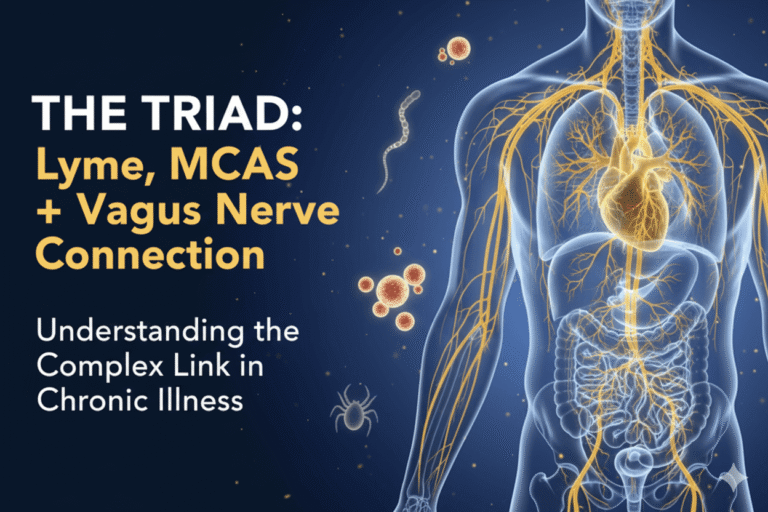
When you’re living with Lyme disease, MCAS (mast cell activation syndrome), and POTS (postural orthostatic tachycardia syndrome), every small improvement matters.
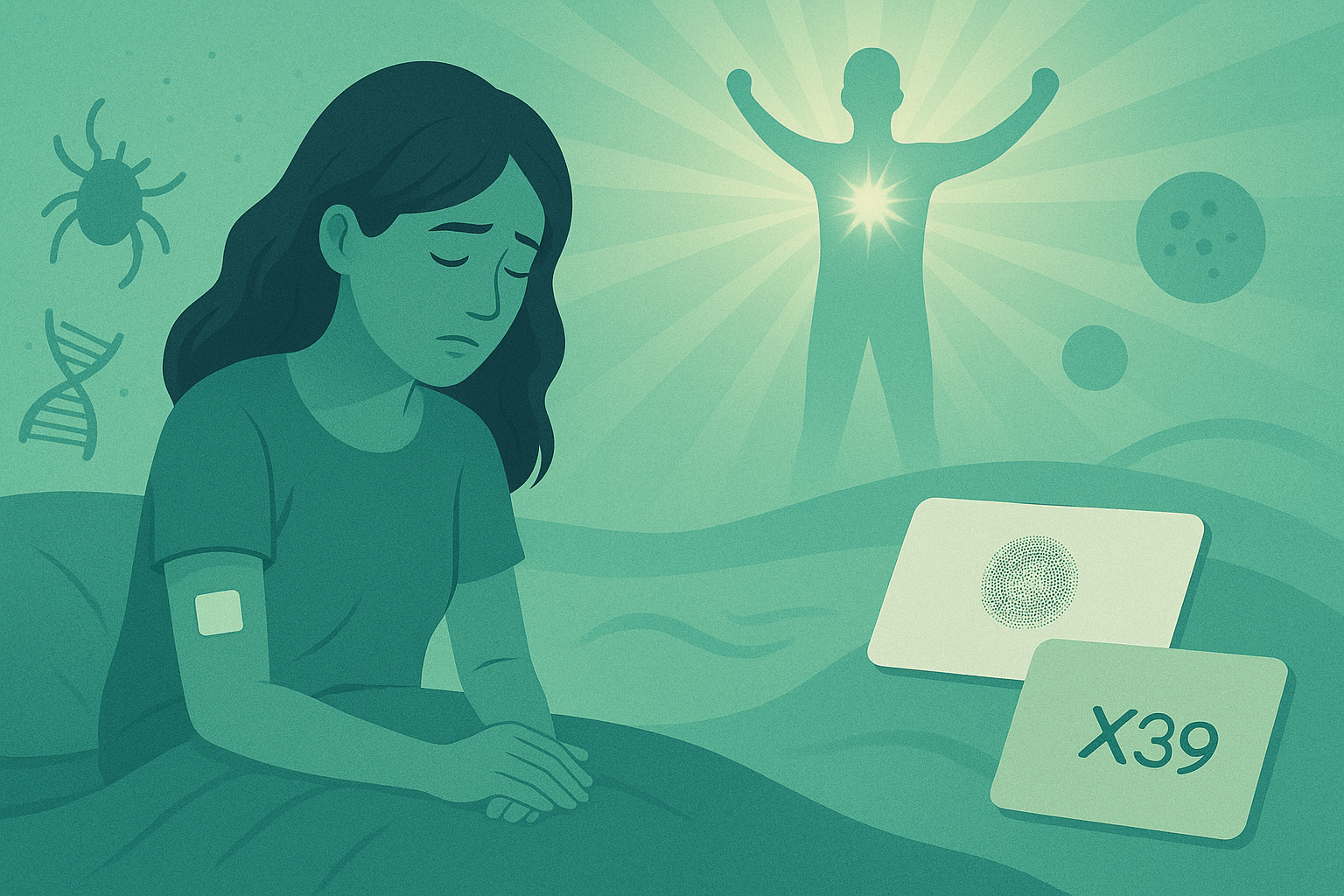
My personal health journey started at the end of 2019 and reached an all-time high around mid-2021. It brought my life to a standstill. At that time, I was bedridden, spending approximately 23 hours a day in bed. For the one hour I was out of bed, I tried to join my family in the living room and sit with them. But at my worst, I couldn’t sit for five seconds before everything went dark (POTS).
I lost a lot of weight, going from 78 kilograms to 49 kilograms. I was highly reactive to everything (MCAS): weather changes, perfume, changing positions, supplements, food, and more. I needed full-time care, and felt like my world had shrunk to four walls.
Within months, something shifted. Something remarkable began to happen.
If you’d like to learn more about my entire journey, you can read the full post here.
Discovering LifeWave Patches
Around this time, a friend introduced me to LifeWave patches – small, wearable patches designed to gently support your body’s natural healing processes. Unlike supplements, or medications, they don’t add anything into your system – instead, they use light and heat from your own body to activate specific biological functions.
My initial reaction was one of deep skepticism. How could a small patch, worn on the skin, possibly help me with such chronic illnesses? The idea of a technology that didn’t introduce any substance in my body -no pills, no injections, no supplements- seemed almost too simple and too good to be true.
Although the concept might sound unusual at first, LifeWave has been around since 2004 and has a global community of users, including people recovering from complex chronic illnesses like Lyme and MCAS. But as many of the readers probably will understand, at some point you become so desperate for some relief that you’re willing to try anything. With nothing to lose and a desperate hope for change, I decided to give the LifeWave X39 patch a try. I am happy that I did because it surpassed my expectations. It’s not a “fast cure-all” tool, but can definitely help you move in the right direction.
To truly understand how the X39 patch works, it’s essential to first grasp the basics of peptides and one specific peptide in particular. GHK-Cu.
What Are Peptides?
Peptides are short chains of amino acids, essentially smaller versions of proteins and the fundamental building blocks of proteins.They ace as essential signaling molecules in the body, communicating with cells to orchestrate various biological functions, such as tissue repair, immune response, hormone and inflammation control.
In conventional medicine, peptides are often used therapeutically to target specific health issues. Peptides are most commonly administered via:
- Subcutaneous injections (under the skin)
- Intramuscular injections (into muscle tissue)
These methods deliver the peptide directly into the bloodstream or target tissue. While effective, this can be sometimes experienced a a inconvenient and sometimes uncomfortable process.
How LifeWave Delivers Peptides Differently
This is where LifeWave comes into play. LifeWave’s approach is different: the X39 patch does not contain GHK-Cu or any physical peptide. Instead, it uses phototherapy – a light based technology – to stimulate the body’s own production of specific peptides.
According to LifeWave, the patches work in a way that’s comparable to sunlight on skin: just as UV rays trigger the body to produce vitamin D, the patch uses specific light wavelengths reflected from the body’s heat to signal cells to produce GHK-Cu naturally.
This approach eliminates the need for injections, making it painless and non-invasive. For people with chronic Lyme disease, MCAS, and POTS, this can be a good starting point. This innovative, non-invasive method allows your body to tap into its own healing potential without external substances.
The Remarkable Benefits of GHK-Cu
GHK-Cu is a small, naturally occurring copper peptide made of three amino acids: glycine, histidine, and lysine. It plays a cruciol role in maintaining health and promoting healing. It was first identified in identified in human plasma in the 1970s and has since been found in saliva and urine.1 While its levels naturally decline after the age of 20, its properties are well-documented in scientific literature.
Here are some of the research-backed benefits of GHK-Cu include2:
- Stimulating wound healing and tissue repair
- Promoting collagen production and skin regeneration
- Modulating inflammation and balancing the immune response
- Supporting nerve regeneration and neuroprotection
- Exhibiting antioxidant and DNA-protective properties
Why This Matters for Lyme disease, MCAS, and POTS
For those dealing with complex chronic illnesses, nerve repair, immune modulation, and tissue healing are crucial. While LifeWave is not a replacement for medical care, in my personal experience it served as an important stepping stone toward regaining functionality.
Why X39 was a game-changer for me
LifeWave has 11 types of patches, but the most-well known is most likely the X39 patch. The X39 patch, powered by the copper peptide GHK-Cu, is LifeWave’s flagship product. Thist tiny patch activates the production of GHK-Cu in the body.
After my friend gave me a tip, I started doing some research. I began by reading about peptides in general, and I also joined some specific LifeWave Facebook groups to learn more about real user experiences.
After a few motnhs, I decided to give it a try. In February 2022, I ordered my first pack of patches – the X39 – because it seemed to have the best results for people with MCAS. Of course, I was also dealing with a host of other issues and their underlying causes, including Lyme, Bartonella, Babesia, gut problems, migraines, and so on. However, my biggest challenge was my extreme sensitivity. I knew that before I could even begin to address the root cause of my illness, I first had to get my body to a place where it could tolerate supplements and other treatments. My primary goal was to become less reactive so I could finally start my healing journey.
I started by placing the X39 patch on my skin every day, making sure to rotate the location. The standard recommendation is 12 hours of daily use, but my body was so sensitive that i could only handle 30 minutes at the beginning. It took me about four to five months of slow, careful progress to work my way up to the full 12 hours.
Amazingly, around the six-month mark, I started to see some clear changes:
- My MCAS flare-ups became less frequent and less severe.
- My chemical and food sensitivities started to calm down.
- POTS symptoms improved enough for me to get out of bed more often and take my first five- to ten-minute walks.
In my case, supporting the body’s repair processes with the LifeWave X39 patches helped calm down my extreme mast cell reactions and autonomic nervous system dysregulation – both key in MCAS and POTS. This wasn’t an overnight miracle, and I was by no means cured, but it was the first small turning point in my recovery in years. It was the first time I had seen some improvements in my symptoms in a very long time.
Final Thoughts
LifeWave patches aren’t a magic cure, they definitely are not a quick fix, but for me they became a powerful tool in my recovery toolbox. Especially with complex conditions like Lyme disease and co-infections, Mast Cell Activation Syndrome and POTS, supporting the body’s ability to repair and being less reactive (calming down MCAS) can open the door to more treatment options – and more hope.
DISCLAIMER: This blog post is based on my personal experience and is for informational purposes only. It is not intended as medical advice. Always consult with a qualified healthcare professional before starting any new treatment or making changes to your current health regimen.
RESOURCES
- Pickart L, Margolina A. Regenerative and Protective Actions of the GHK-Cu Peptide in the Light of the New Gene Data. Int J Mol Sci. 2018 Jul 7;19(7):1987. doi: 10.3390/ijms19071987. PMID: 29986520; PMCID: PMC6073405. ↩︎
- Pickart L, Vasquez-Soltero JM, Margolina A. The Effect of the Human Peptide GHK on Gene Expression Relevant to Nervous System Function and Cognitive Decline. Brain Sci. 2017 Feb 15;7(2):20. doi: 10.3390/brainsci7020020. PMID: 28212278; PMCID: PMC5332963. ↩︎