When you’re dealing with Lyme disease, it can feel like every part of your body is affected – your digestion, your heart rate, your mood, even your ability yo handle stress. One piece of this puzzle that’s getting more attention is the vagus nerve.
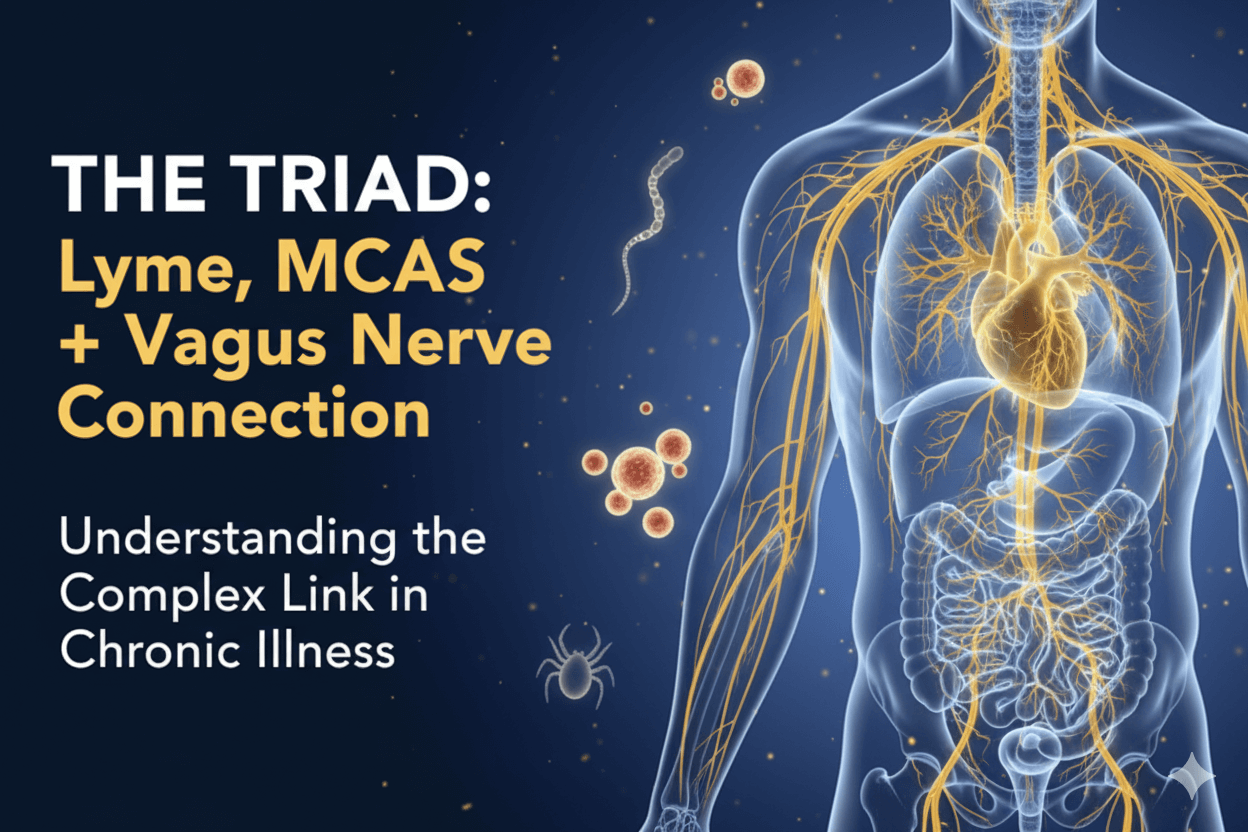
The vagus nerve is one of the longest nerves in your body, running from your brainstem down to your abdomen. It’s a central player in your parasympathetic nervous system – the “rest and digest” system that calms your body, supports digestion, reguates your heart rate, and helps control inflammation.
How Lyme Disease Can Affect the Vagus Nerve
Lyme disease can trigger inflammation throughout the body. This inflammation doens’t just affect joints and muscles – it can also impact the nervous system. When the vagus nerve becomes inflamed or irritated, it can disrupt normal functions, leading to a wide range of symptoms.
For people with Lyme, vagus nerve dysfunction may contribute to:
- Digestive issues like nausea, and bloating
- Irregular heart rate or blood pressure changes
- Anxiety, depression, or braing fog
- Increased sensitivities to light, sound, and smell
- MCAS (Mast Cell Activation Syndrome) and POTS (Postural Orthostatic Tachycardia Syndrome)
Why This Connection Matters
The vagus nerve acts like a super highway between brain and body. Understanding the vagus nerve’s role in Lyme disease can help explain why symptoms are so widespread and unpredictable – nerve inflammation can impact multiple body systems at once. By supporting vagus nerve function, you might improve not only nervous system health but also digestion, mood, and inflammation control.
Supporting Your Vagus Nerve During Recovery
With the right training, you can positively reset or tone your vagus nerve.
Reset/toning/humming/excercises/brain retraining
Brain Retraining
Primal Trust / Gupta / DNRS
My Personal Take
Final Thoughts
Healing from Lyme, co-infections, MCAS, and POTS isn’t just about clearing pathogens – but also calming a wired nervous sytstem. The vagus nerve often plays a bigger role in my recovery than many realize. By addressing both the infection and the nervous system, you give your body more tools to heal. Small, consisten actions and interventions to stimulate and support your vagus nerve can have a ripple effect across your entire body. They can help open the door to deeper healing and resilience.
block/links naar Apollo Neuro & LifeWave?